Harvey was born in late 2017 — our first child.
He had a relatively normal childhood — happy, confident, and meeting all the expected developmental milestones. Harvey was strong, growing fast, and very healthy, apart from two febrile convulsions when he was around two years of age.
On a family holiday when Harvey was four, he experienced his first absence seizure. From that day to the present he has regularly had absence seizures, with some days certainly better than others. During the four years of absence seizures, some days he might only have a couple, while on other days they would occur every 10 minutes.
In early 2026, for a period of two weeks, Harvey did not have any absence seizures — a positive and unexpected occurrence that has inspired us to create this website.
Harvey's first absence seizure marked a real shift for him and for our family. Our adventurous little boy, who loved taking risks, climbing, and riding his bike, became more cautious and reserved. We began to notice changes both emotionally and physically, particularly in his gross motor skills and confidence.
Harvey's absence seizures are generally characterised by standing still with a blank stare, with the seizure lasting around 7 seconds, though sometimes they can be longer or shorter. On harder days this can be accompanied by eye rolling — these are certainly the hardest days.
During his EEG, which confirmed a diagnosis of typical generalised absence seizures, it was noted that Harvey could recall something spoken to him at the start of a seizure around 25% of the time. He cannot be shaken out of a seizure, and there is generally no demonstrable or consistent pattern to when a seizure will occur.
Of particular note, we observed the following during the onset of absence seizures:
- A step backwards in physical confidence and capability; he became more reluctant to climb or ride his bike
- Increased forgetfulness and straying from tasks — we assume this was the result of having an absence seizure mid-task and then appearing to “reset”
- Poor sleep — harder to get to sleep, a large amount of movement in bed, and some oral automatisms (lip smacking) while sleeping
- Pain and tenderness in his shoulders and back
- Some stimming, particularly waving his hands when excited
- Redness in his cheeks and skin
- Appearing to run hot — if Harvey had a cold his temperature would rise quickly
Over the years, and as discussed further below, we have noticed that the seizures have changed somewhat. While Harvey used to remain stationary, he will now often continue walking, keep performing the same action, and increasingly use his hands to some degree during a seizure. Of particular interest to us is that Harvey has never had a seizure while riding his bike.
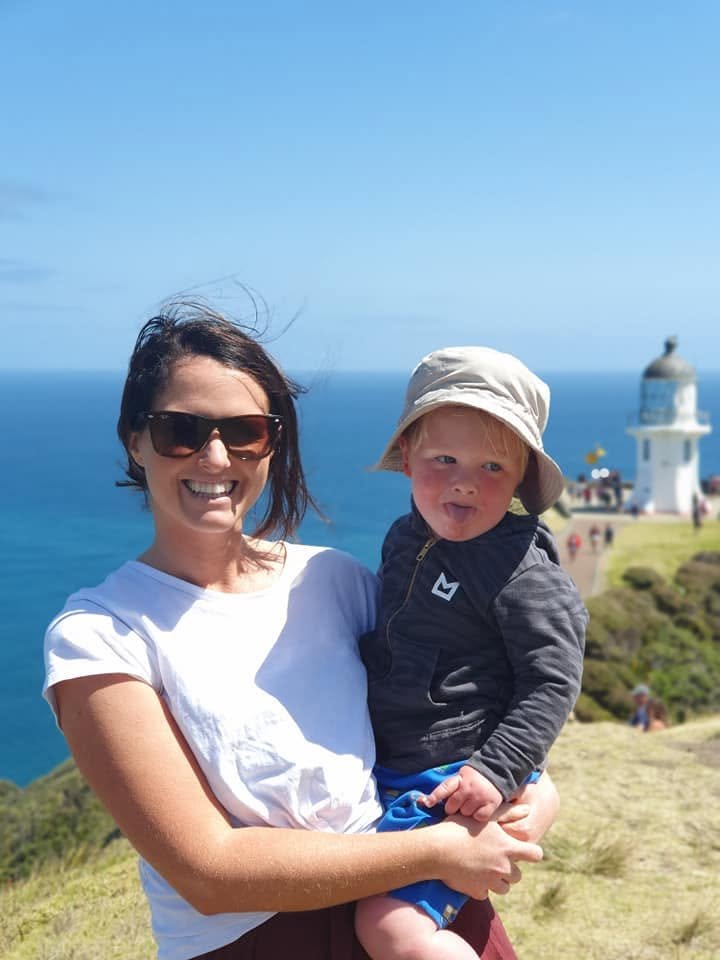


Seeking Treatment
Consulting a neurologist
Over the years we have consulted a number of specialists, both mainstream and alternative, in an effort to help Harvey, and have also tried to reduce his seizures through diet and supplementation.
Following the EEG and an initial diagnosis that confirmed Harvey had absence seizures, we consulted a leading neurologist. We were initially excited about the prospect of finding a solution and resolving the seizures. We entered the process in good faith, and the neurologist felt confident that medication would help Harvey. While he was friendly and polite, he was reluctant to discuss Harvey's diagnosis in any detail, explain how the medication worked, or discuss the side effects or any potential long-term effects of the treatment — which was somewhat upsetting, but understandable considering he was a leading specialist in his field.
Despite this, we still had faith that we could help Harvey and were prescribed a course of ethosuximide. The neurologist provided details on how and when the drug should be administered, mentioned that it also acted as a mood regulator, and noted that safe use required periodic monitoring of liver and kidney function.
Harvey took ethosuximide but after starting the medication he became unwell, vomiting repeatedly, and developed strange red marks on his upper back, which we were later informed was an allergic reaction to the drug. We were asked to persevere with the medication, but we could not watch Harvey being sick and have always felt that in such situations the body is trying to tell you something. When we contacted the neurologist, he was not concerned by the reaction and suggested we try another medication comprising valproic acid.
Following this initial setback, we became more concerned about the side effects and long-term effects of both medications and began investigating them further. While we recognize that we are not medical experts, and understand that many people need these drugs because of the severity of their seizures, we took the listed side effects seriously — particularly those Harvey had already experienced, and the potential cognitive effects of antiepileptic drugs highlighted in the research.
Given that Harvey was happy and progressing well in all aspects of life, we decided not to continue with medication at that stage. We remained open to reconsidering it if and when we felt it became necessary, recognising that extraordinary circumstances could require us to carefully weigh the decision again. We also noted that many children grow out of absence seizures, and decided to see how his condition progressed in the hope that he might one day grow out of them.
Present Day
Harvey today
Following the decision to stop medication and see how his condition progressed, Harvey has continued to grow into a happy, well-rounded and intelligent young man. He is driven to learn, outgoing, diligent, kind and conscientious, and rarely gets upset.
Harvey continues to have seizures, with good days and bad days. He lives a peaceful life on a farm, has great friends and is homeschooled by his mum. As a family we prioritise health — we eat well, stay active, and spend plenty of time outdoors. Harvey is often outside walking around the farm, chasing the dog, or bouncing on the trampoline. He has also played ripper rugby and done well, with seizures being less frequent during these games. Interestingly, when playing golf he tends to have a larger number of seizures.
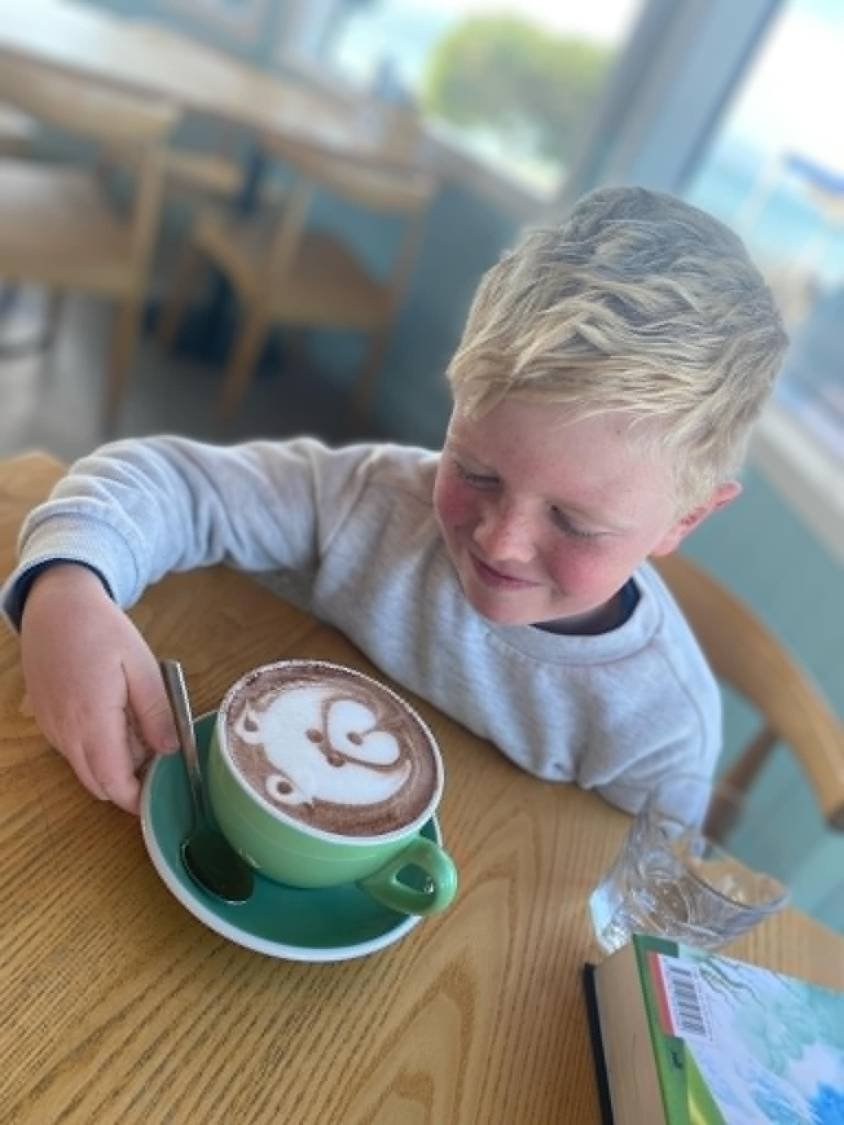
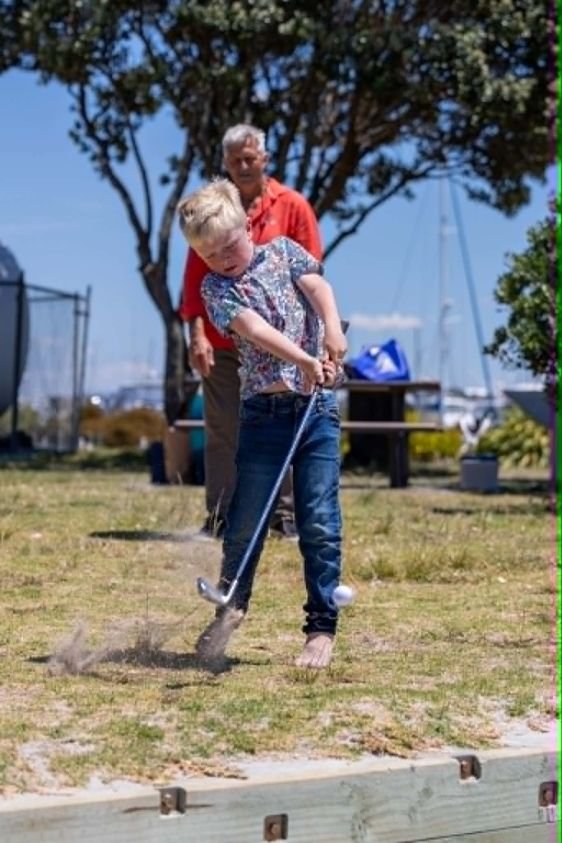
At the same time, many of his interests are more indoor-based. He loves reading books, playing the Pokémon Trading Card Game (competing every Saturday at our local card shop), and spends a large part of his days playing with his little sister McKenzie, who is three years younger. Harvey also does ballroom dancing and competes — something that is a must, as his mum is a professional dancer and runs classes. He is easily able to remember routines and is growing quickly in his abilities.
While Harvey continues to have seizures and is doing very well, we have noticed some clear patterns over the years:
Patterns We Noticed Over The Years
- They often increase just before he comes down with a cold or when he is sick
- They often increase when he is tired, or stressed
- There are more in winter, although this could be linked to more frequent colds
- They are frequently worse after he has eaten a lot of sugar or heavily processed food
- They tend to be more frequent in the mornings and evenings
- They are more likely to occur during fine motor activities such as handwriting
- They are less likely to occur when reading
- While Harvey sometimes has seizures during gross motor activities, he does not have them when riding his bike but will occasionally have a seizure while dancing
We only mention these nuances of his seizures to share a few observations we have noticed that may be relevant to other families.
With our diets, we have possibly been guilty of jumping on health trends and periodically removing certain foods. When Harvey was younger he drank a large amount of milk, although from around the age of three he was certainly drinking less milk and eating less cheese. There were also other aspects of his diet that were probably less balanced at times — for example, he did not always eat enough vegetables or fruit, even though they still formed part of his meals.
Overall, we generally followed a Western-style diet that included a fair amount of carbohydrates and possibly more sugar than ideal, though still less than most children his age. His diet has always been relatively high in protein with limited processed foods.
We also tried various supplements during this time, but we were never consistent with them. Looking back, we were often hoping for an immediate fix and therefore may have wasted a good deal of time, money and effort by not giving the supplements a proper chance to work. We did not find anything that clearly helped at the time, although in hindsight it is unrealistic to expect immediate change.
Investigating Further
Hair Tissue Mineral Analysis
Analytical Research Labs (Phoenix, AZ, USA)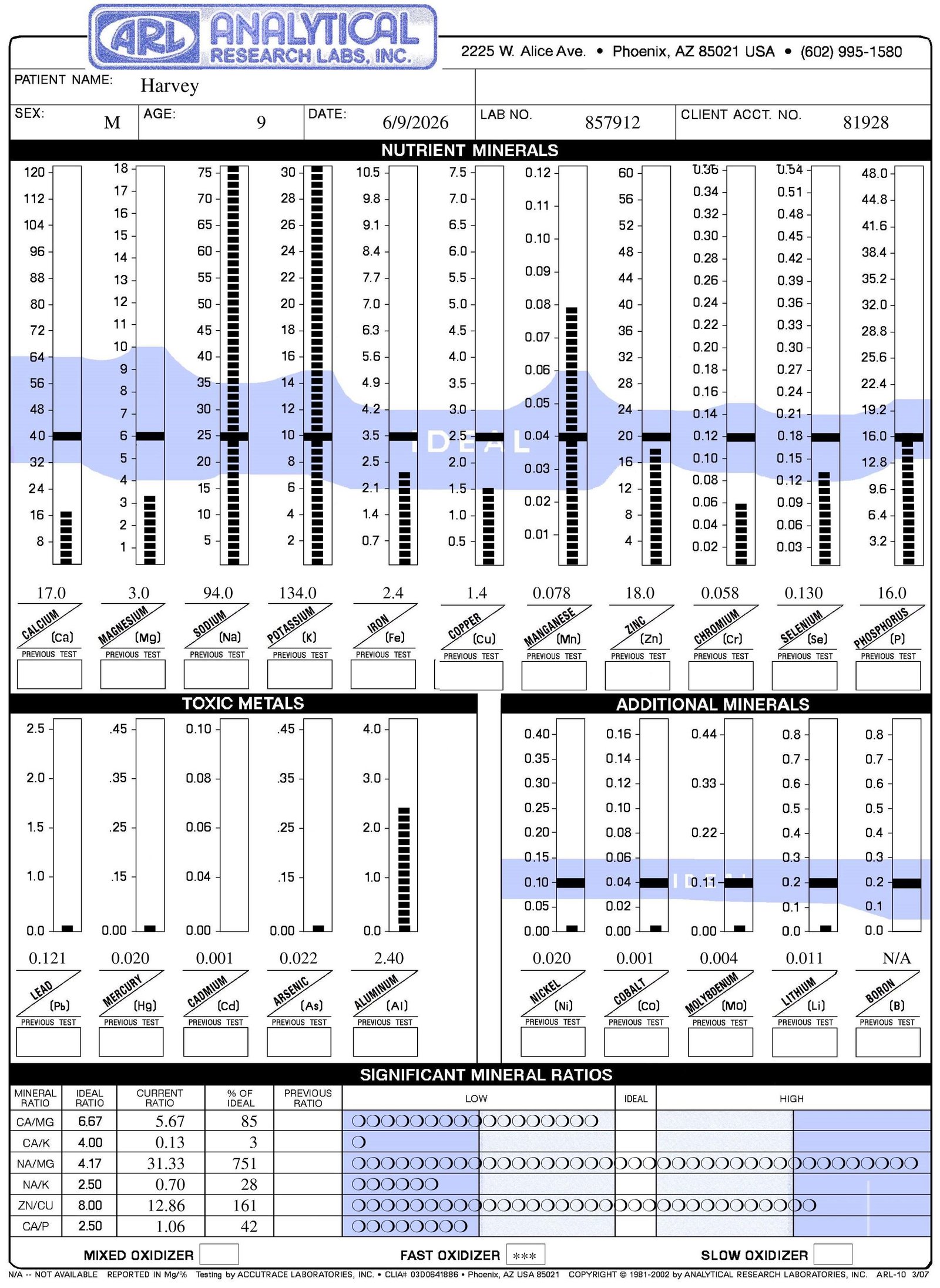
Following a recommendation from a friend, we decided to explore a hair tissue mineral analysis (HTMA) for Harvey. At the time we were looking for any information that might help us better understand what was happening in his body.
The test was carried out through Analytical Research Labs in America and was arranged for us by Jaine Kirtley of Bay Naturopath in Tauranga. The process itself was simple. A small sample of hair was cut from the back of Harvey's head and posted to the laboratory in the United States. It took approximately two weeks for the results to be returned. When the report arrived, it revealed several clear and significant imbalances.
Low Levels
- Magnesium
- Calcium
- Iron
- Chromium
High Levels
- Sodium
- Potassium
- Manganese
- Aluminum
The most striking findings were the very low levels of magnesium and calcium. Alongside these, copper and chromium were also low. In contrast, sodium and potassium were extremely high, creating what the report described as a strong fast oxidizer pattern. Manganese was elevated and aluminum was above the upper limit. These results stood out to us for several reasons. The combination of very low magnesium and calcium with extremely high sodium and potassium was particularly notable. The report commented that these kinds of electrolyte imbalances can play a role in nervous system excitability and seizure activity. It also noted signs of significant adrenal stress and possible issues with how Harvey's body was handling sugars and carbohydrates.
As part of the HTMA process, Jaine provided a list of suggested supplements aimed at addressing the imbalances shown in the results. After receiving the report, we spent time researching the recommendations, looking into the different forms of the minerals, and deciding which products we felt most comfortable using. We made some changes to the original suggestions based on our own further investigation.
Looking back, this test marked an important point in our journey. It was the first time we had some indication showing significant mineral imbalances, and it gave us a new direction to explore in supporting Harvey. We were aware that HTMA has received a fair amount of criticism regarding its accuracy as a measure of what is happening in the body. At the same time, we had also heard that it can provide a useful three-month snapshot of mineral patterns in the tissues. With that in mind, we decided to treat the results as one piece of information among others, rather than a definitive diagnosis.
A Second Data Point
Blood testing
Around the same time, we also arranged blood tests for Harvey. While the hair tissue mineral analysis looks at mineral patterns over a longer period (roughly three months), blood tests provide a real-time snapshot of what is circulating in the bloodstream at that moment.
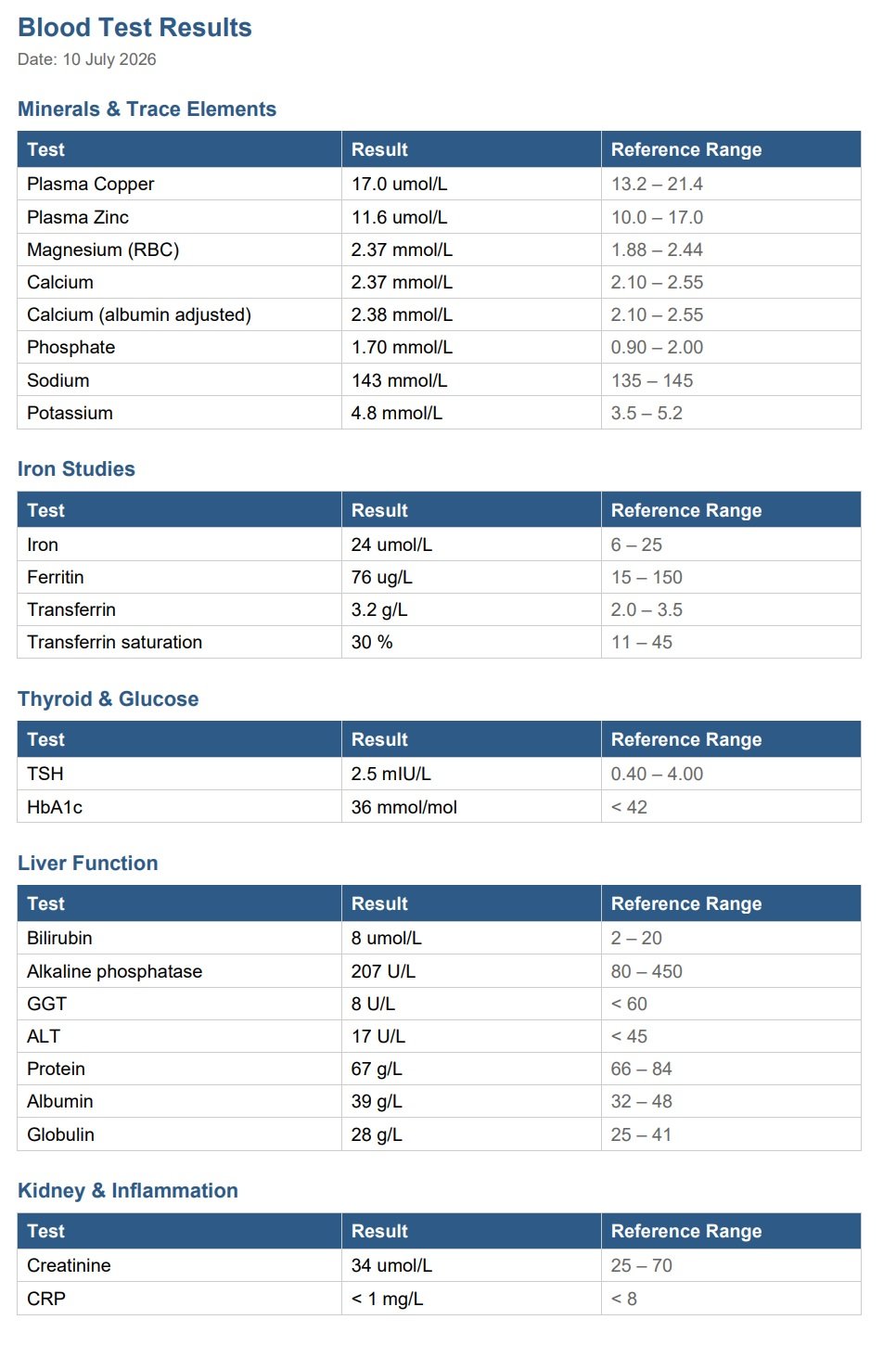
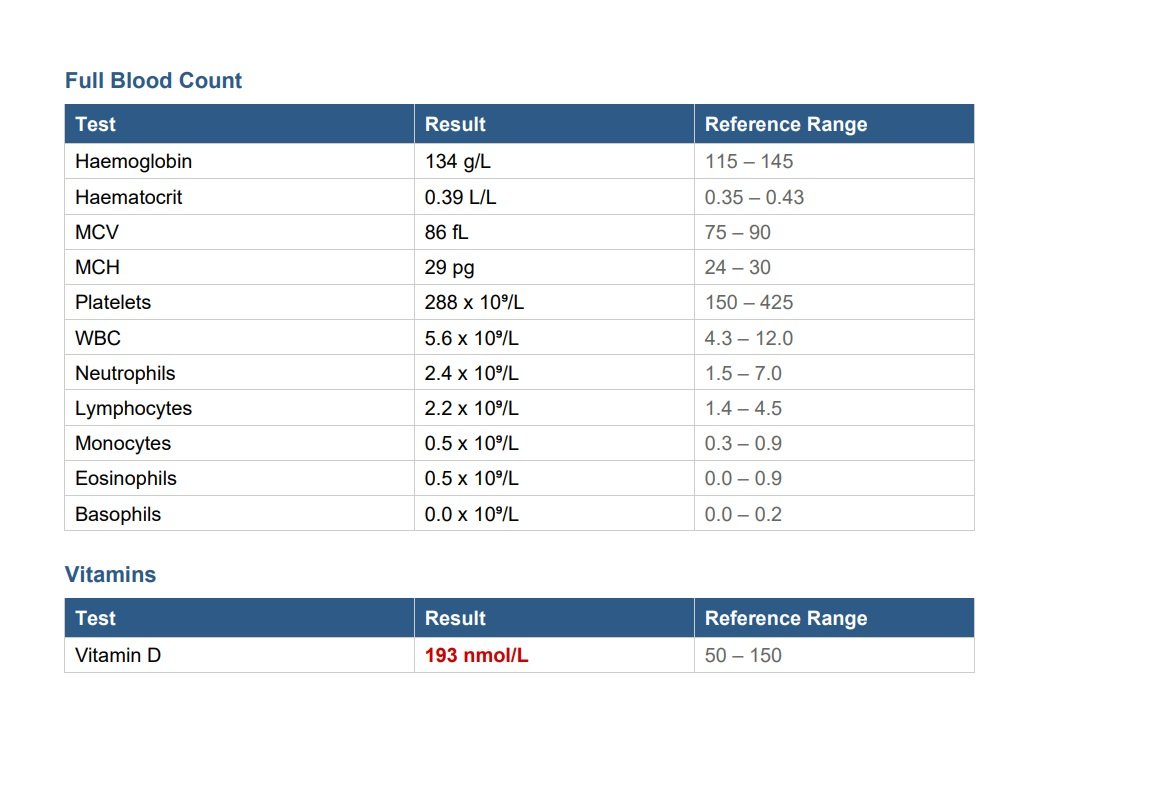
Interestingly, the low levels of minerals that showed up clearly on the hair test were not reflected in the blood results.
| Marker | Hair Tissue (HTMA) | Blood |
|---|---|---|
| Calcium | 17.0 — Very Low | 2.37 mmol/L — Normal |
| Magnesium | 3.0 — Low | 2.37 mmol/L (RBC) — Normal |
| Copper | 1.4 — Low | 17.0 umol/L (Plasma) — Normal |
| Chromium | 0.058 — Low | — |
| Zinc | — | 11.6 umol/L (Plasma) — Normal |
| Vitamin D | — | 193 nmol/L — High |
We found this contrast particularly interesting. It is often discussed that the body works hard to keep blood levels of essential minerals within a tight range, even if that means drawing them from tissues, bones, or cells. In other words, blood levels can appear normal while tissue or intracellular levels may still be low.
Given that Harvey was experiencing frequent absence seizures, along with the extremely high sodium and potassium shown on the hair analysis, we felt it was worth considering whether his intracellular mineral status might be more relevant than the blood results alone suggested. This difference between the two types of testing became something we continued to think about and investigate further.
What We Tried Next
Starting supplementation
Following the HTMA results, we began giving Harvey the supplements recommended by Jaine Kirtley. These included magnesium, calcium, vitamin D, omega-3 (fish oil), and a probiotic. We introduced them gradually while continuing to observe how he responded.
The first week was very interesting. We immediately noticed that Harvey had clearer eyes, seemed less tired, and was sleeping significantly better. One important aspect was that Harvey's shoulders were very tender to touch — you couldn't apply pressure without him crying because the pain was so intense. But after the first week we noted that you could apply pressure to his shoulders without him getting upset.
Although seizures continued for the first two weeks, we couldn't help but feel that something was shifting. The seizures changed from full eye rolling to somewhat more subtle or vulnerable seizures, although they were less severe. In the third week, we noticed certain days with improving lower seizure activity.
Read more about what we tried on the Nervous System Support page, and the papers we read on the Research page.